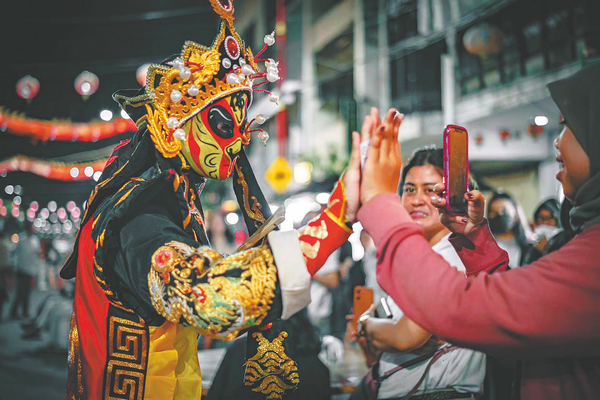
Face-changing Art
Introduction
Face-changing, or "bian lian" in Chinese, is a captivating performance art integral to traditional Sichuan Opera, a distinguished cultural heritage originating from Southwest China. The art involves performers donning vibrant attire and intricate masks that change swiftly, often with a flick of a fan or a subtle gesture, revealing different characters and expressions almost instantaneously. This dramatic and visually stunning technique is a hallmark of Sichuan Opera, alongside other elements like fire-spitting and acrobatics.
Historical Background
The origins of face-changing are deeply embedded in the rich tapestry of Sichuan Opera, with a history that spans several centuries. Sichuan Opera itself is a composite of various local operatic styles and became particularly prominent during the Qing Dynasty (1644-1911). Face-changing, as a technique, was developed to enhance the dramatic effect of the opera, allowing performers to embody multiple characters and convey complex emotions swiftly and effectively. The exact methods of face-changing are closely guarded secrets, traditionally passed down within families or from master to apprentice.
Cultural Significance
Face-changing is more than just a performance art; it is a symbol of cultural identity and heritage. As an intangible cultural heritage of China, it represents the rich history and artistic innovation of Sichuan Opera. While modern adaptations and global dissemination have introduced face-changing to new audiences, efforts continue within China to preserve its traditional methods and cultural significance.
Challenges and Techniques
Mastering face-changing requires rigorous training and an understanding of its complex techniques. Performers must synchronize their movements with music while executing seamless mask changes. The training process is often intensive, demanding hours of practice daily.
The techniques employed in face-changing remain a closely guarded secret, with performers often using a combination of slight-of-hand, concealed strings, and other methods to achieve the rapid mask changes that astonish audiences.
Modern Development
In recent years, face-changing has transcended its traditional confines, finding new audiences globally. This expansion is exemplified by performers like Indra Kriswana Putra, an Indonesian entertainer at Haidilao hotpot restaurants in the United States. Putra, who started his journey with Sichuan Opera face-changing in 2019, has become an ambassador for the art form in the West. His performances in Dallas, Texas, have captivated diverse audiences, introducing this unique cultural tradition to those unfamiliar with it.
Haidilao, a popular Chinese hotpot restaurant chain, has played a significant role in popularizing face-changing outside of China. Since around 2013, the chain has incorporated face-changing performances into its dining experience as a unique entertainment service. This fusion of culinary and cultural experiences has been particularly successful, with face-changing becoming a signature feature of Haidilao’s brand.








